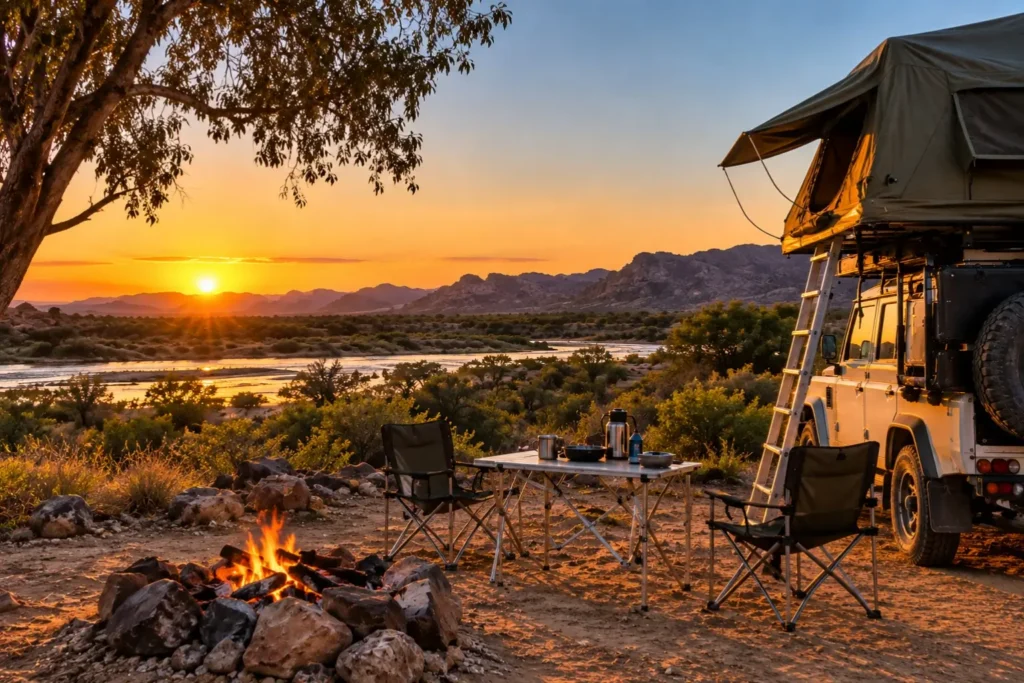
You’ve picked your route, booked your campsites and chosen your vehicle. Now comes the part many first-time overlanders get wrong: packing.
Pack too little and you’ll be hunting for a torch at a remote campsite with no shop for 200 km. Pack too much and you’ll spend every morning playing Tetris in the load bay. The good news is that a well-equipped 4×4 camper already carries most of the heavy gear. Your job is to fill in the gaps.
This packing list is built for self-drive camping trips through South Africa, Namibia and Botswana. It covers what’s usually supplied, what you need to bring and what’s better left at home.
What's Already in Your 4x4 Camper
Before you pack anything, find out what comes with the vehicle. When you choose 4×4 camper hire through Ideal Travel, most vehicles include:
- A rooftop or built-in tent with bedding
- A camp fridge
- Cooking equipment, crockery and cutlery
- Camping chairs and a table
Equipment does vary between vehicles and suppliers. Check your specific vehicle’s details page or ask for the full equipment list before you start packing. There’s no point bringing a gas stove if one is already bolted into the canopy.
Things that are often not included, or differ between vehicles: pillows, towels, a braai grid, firewood, extra water containers and recovery gear. Ask about each of these.
Documents and Paperwork
This is the section that can actually end a trip early, so pack it first and keep it in one waterproof pouch inside the cab.
- Passports for every traveller, valid well beyond your return date
- Driver’s licences for every driver, plus an International Driving Permit if your licence isn’t in English
- Your rental agreement and the vehicle’s papers
- A letter of authority from the supplier if you’re crossing borders
- Proof of travel insurance
- Campsite and park booking confirmations, printed as well as on your phone
- Some cash in local currency for border fees, road permits and fuel in remote towns
Crossing from South Africa into Namibia or Botswana? Tell your booking agent every country on your route before you collect the vehicle, because cross-border permission has to be arranged in advance. Travelling with children? Check the current documentation requirements for minors before you leave, as border officials can ask for more than a passport.
Clothing for Bush and Desert Conditions
Southern Africa catches people out with its temperature swings. A Namibian desert day can be scorching, and the same night can drop close to freezing in winter. Pack in layers rather than bulky single items.
- Lightweight long-sleeved shirts and long trousers for sun and mosquito protection
- Shorts and T-shirts for hot days
- A warm fleece or down jacket, beanie and thermal layer, especially from May to August
- A light rain jacket for summer storms in Botswana and the Kruger region
- Wide-brimmed hat and good sunglasses
- Closed walking shoes plus sandals or slops for campsite showers
- Neutral colours (khaki, olive, brown) for game viewing
Rooftop tents get cold at night in winter. Warm sleepwear and thick socks make a bigger difference than you’d expect.
Food, Water and Supplies
Stock up in the city where you collect your camper. Larger towns have good supermarkets, but the choice thins out quickly once you’re on remote routes.
Water is the priority. Plan on at least 5 litres per person per day for drinking and cooking, and carry extra on remote stretches. Ask whether your camper has a built-in water tank, and bring extra containers if you’re heading somewhere isolated.
Food: Long-life staples travel best: pasta, rice, tinned food, wraps, rusks, nuts, oats and coffee. The camp fridge handles meat, dairy and drinks.
Veterinary fences: Namibia and Botswana have veterinary control points that restrict raw meat, dairy and some fresh produce. Items can be confiscated at these checkpoints. Check the current rules for your route and plan to restock after crossing rather than before.
Campsite basics:
- Firewood and firelighters (buy locally where possible)
- Braai grid and tongs if not supplied
- Dishwashing liquid, sponge and a collapsible basin
- Refuse bags, because many remote campsites expect you to take your rubbish with you
- Paper towels, wet wipes and toilet paper
- Matches or a gas lighter
Personal Items and Health
- Sunscreen (SPF 50), lip balm and after-sun
- Insect repellent
- A well-stocked first aid kit, including rehydration sachets, antihistamines, plasters and pain relief
- Prescription medication in its original packaging, with extra in case of delays
- Hand sanitiser
- Quick-dry towels
- A headlamp for every person (more useful than a torch at night)
Parts of the Kruger region, northern Namibia and northern Botswana are malaria areas. Speak to a travel clinic about prevention well before your trip.
Tech, Navigation and Power
Cell signal disappears fast in the Kalahari, Damaraland and much of northern Botswana. Don’t rely on live maps.
Extra Gear Worth Packing for Remote Routes
If your route heads into sand, salt pans or remote tracks, check with your supplier what recovery equipment comes with the vehicle. Useful items to confirm or bring:
- Tyre pressure gauge (deflating tyres is standard practice in sand)
- Compressor for re-inflating
- Spade
- Tow strap
- Duct tape and cable ties, which fix more than you’d think
- Work gloves
Not sure whether your route needs this level of preparation? Our FAQ covers road conditions and driving experience, or you can ask the team when you request a quote.
What to Leave at Home
- Hard suitcases. Soft duffel bags squash into tight spaces and are far easier to pack around camping gear.
- Too many clothes. Most campsites have laundry facilities or a basin, and you’ll wear the same comfortable outfits repeatedly.
- Duplicate kitchen gear. Check what’s supplied first.
- Valuables you don’t need. Jewellery and expensive extras just become something else to worry about.
- Glass containers. They rattle and break on corrugated gravel roads. Decant into plastic where you can.
Packing Tips for a Rooftop Tent Trip
Keep a “night bag.” A small bag with toiletries, a headlamp, warm layers and tomorrow’s clothes saves you digging through the load bay in the dark.
Pack heavy items low. Water, tins and tools go at the bottom of the load area. This helps with handling on gravel.
Use the cab for daily essentials. Snacks, water, sunscreen, binoculars, documents and the camera should all be within reach while driving.
Pack for the vehicle size. A compact 2 sleeper such as the Suzuki Jimny camper has much less storage than a Land Cruiser, so couples should pack light. Families in a larger 4 sleeper like the Group C Land Cruiser have more room but more people to pack for.
Do a test setup on day one. Open the rooftop tent, find every piece of equipment and check the fridge before you leave the depot. It’s far easier to sort out a missing item in town than at a remote campsite.
Your Quick 4x4 Camping Checklist
- Passports, licences, rental agreement, letter of authority
- Cash and cards
- Travel insurance details
- Campsite bookings
- Layered clothing, warm jacket, hat and sunglasses
- Closed shoes and campsite sandals
- Water (5 L+ per person per day) and long-life food
- Firewood, firelighters and braai grid
- Dishwashing kit and rubbish bags
- First aid kit and medication
- Sunscreen and insect repellent
- Headlamps, power bank and 12V chargers
- Offline maps and a paper map
- Binoculars and camera
- Tyre gauge and recovery gear for remote routes
Frequently Asked Questions
Do I need to bring my own sleeping bags?
Most 4×4 campers come with bedding for the rooftop or built-in tent. Confirm what’s supplied for your vehicle. Some travellers bring a light sleeping bag liner or an extra blanket for cold winter nights.
How much luggage fits in a 4x4 camper?
It depends on the vehicle. Assume one soft duffel bag per person plus a small day bag. Larger 4 sleeper campers on double cab or Land Cruiser chassis have more storage than compact 2 sleepers.
Where should I stock up on groceries?
Still choosing between a camper and a motorhome? Read our guide to motorhome vs 4×4 camper. Planning to stay in lodges instead of camping? A regular 4×4 vehicle may suit you better.
Ready to Plan Your Trip?
Still choosing between a camper and a motorhome? Read our guide to motorhome vs 4×4 camper. Planning to stay in lodges instead of camping? A regular 4×4 vehicle may suit you better.
Once your packing list is sorted, all that’s left is choosing your camper. Browse our 4×4 campers or contact the Ideal Travel team for a quote based on your route and group size.<