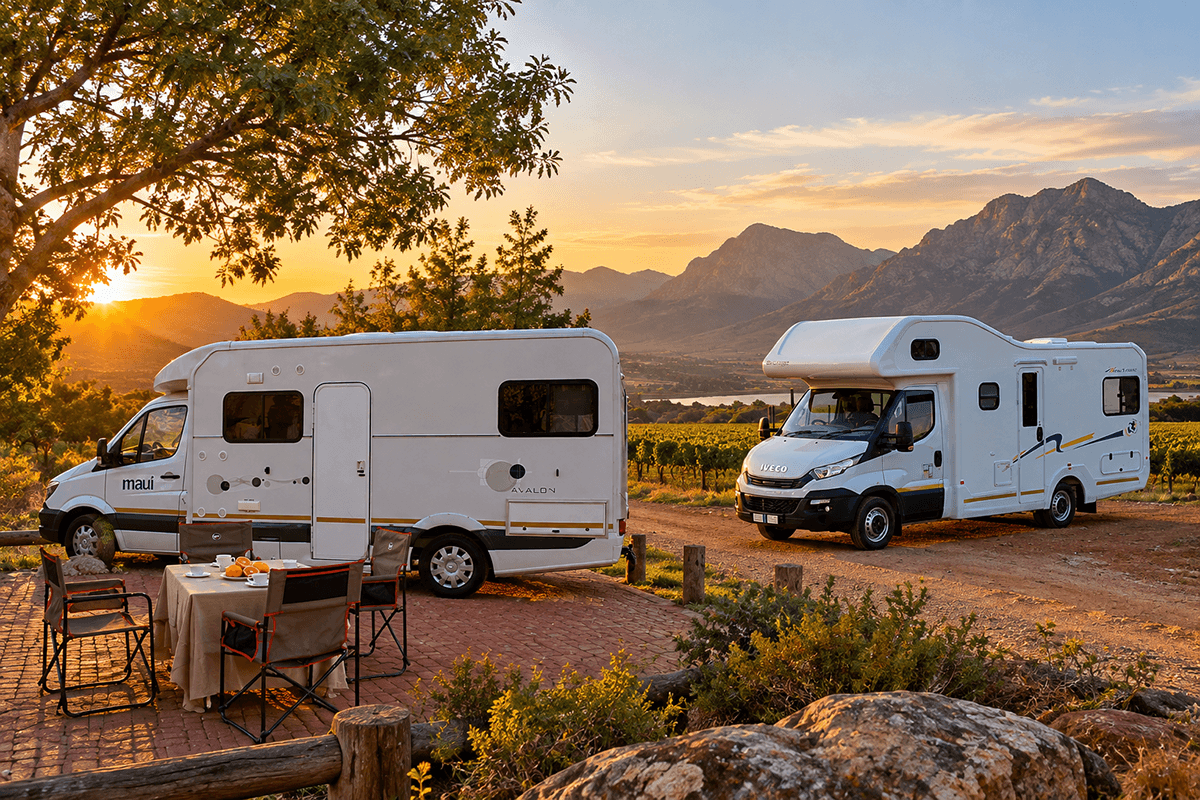
Driving a motorhome in South Africa is easier than most first-timers expect. The vehicles are automatic, the main routes are tarred, and within an hour or two most drivers feel at home behind the wheel.
What takes adjusting to is the size of the vehicle and a few local road habits. This guide covers what to expect on your first day, the road rules visitors ask about most, and the practical habits that make a motorhome hire holiday relaxed rather than stressful.
Do You Need a Special Licence?
No. The motorhomes offered through Ideal Travel can be driven on a standard passenger vehicle licence, subject to each rental supplier’s requirements. International visitors may also need an International Driving Permit, depending on where their licence was issued.
We’ve covered this in detail in the licence requirements in our FAQ, so this guide focuses on the driving itself.
Make the Most of Your Vehicle Handover
Your first lesson happens at the depot, before you turn the key. The handover walks you through the vehicle, and it’s worth taking your time.
Ask the staff to show you:
- How the gas, water, electrical and toilet systems work
- Where the fuel cap is and which fuel the vehicle takes
- How to lock every door, window and roof hatch
- What to secure inside before driving off
- Who to call if something goes wrong on the road
Take photos or a short video as you go. It’s easy to forget details once you’re on the road.
Plan your first afternoon lightly. If you’re collecting through motorhome hire in Johannesburg, a short first leg out of the city traffic is a good idea. With Cape Town motorhome hire, the Winelands or West Coast are easy first stops that let you get comfortable before longer drives.
Get Used to the Size
A motorhome is taller, longer and heavier than a car. Most first-time nerves come from this, and the fix is simply awareness.
- Know your height. Check the vehicle’s height at handover. Watch for low fuel-station canopies, shopping-centre parking garages, drive-throughs and overhanging tree branches.
- Swing wide on corners. The rear wheels cut inside the front ones. Take turns wider than you would in a car, especially in towns.
- Use your mirrors constantly. There’s no rear-view mirror view through the back, so your side mirrors do the work.
- Brake earlier. A loaded motorhome takes longer to stop. Leave a bigger gap to the vehicle ahead.
- Respect crosswinds. Strong winds are common in the Western Cape and along open stretches of the Karoo. Slow down and keep both hands on the wheel.
- Get help reversing. Ask a passenger to guide you from outside. Agree on hand signals before you start.
Larger models such as the 6-sleeper Discoverer 6 need a little more care than the 4-sleeper Discoverer 4. If you’re nervous about size, choose the smallest vehicle that fits your group.
South African Road Rules Visitors Should Know
South Africa drives on the left-hand side of the road. If you’re from a right-hand-drive country, the first few roundabouts and right turns need extra concentration. A passenger saying “keep left” at junctions helps more than you’d think.
| Rule | What it means for you |
|---|---|
| Speed limits | 60 km/h in towns, 100 km/h on rural roads, 120 km/h on freeways, unless signs say otherwise |
| Seatbelts | Compulsory for every occupant while the vehicle is moving |
| Mobile phones | Hand-held use while driving is illegal. Use a phone mount for navigation |
| Alcohol | The legal limit is low. The only safe plan is not to drink and drive |
| Four-way stops | First to arrive goes first. Very common in towns |
| Traffic lights | Locals call them "robots". If they're not working, treat the junction as a four-way stop |
Speed limits are a maximum, not a target. Most motorhome drivers find around 90 to 100 km/h comfortable on the open road.
Plan Realistic Daily Distances
The most common first-timer mistake is planning too many kilometres per day. A motorhome travels slower than a car, and you’ll want time for stops, shopping and setting up camp.
As a guide, keep most driving days to around 300 km or less. Build in rest days where you don’t drive at all. Your holiday is the places you stop, not the hours at the wheel.
National parks have their own rules. In Kruger National Park, speed limits inside the park are much lower than on public roads, and you must be inside your rest camp before the gates close. Factor gate times into your plan.
If you’d rather not drive back to where you started, a one-way rental can save a long return leg. Ask us about this when you request your quote.
Fuel, Tolls and Paying on the Road
Fuel stations are full-service. An attendant fills the tank, and will often offer to clean the windscreen and check tyre pressures. Tell them clearly which fuel your motorhome takes. A small tip for good service is customary.
Fill up early in rural areas. Towns can be far apart in the Karoo, the Northern Cape and parts of the Eastern Cape. Treat half a tank as your signal to refuel.
Toll roads are common on major national routes, including stretches of the N1, N3 and N4. Toll plazas accept cards, but keep some cash in the vehicle as a backup. Gauteng’s old e-toll gantries no longer charge, so there’s nothing to set up for driving around Johannesburg and Pretoria.
Keep a little cash handy for tips, car guards and small farm stalls along the way.
Road Conditions to Expect
South Africa’s national routes are generally good, but conditions vary. Stay alert for:
- Potholes, especially on secondary roads and after heavy rain
- Animals on the road in rural areas, including cattle, goats and wildlife
- Pedestrians walking along the roadside, sometimes on freeways
- Minibus taxis that stop suddenly to pick up or drop off passengers
- Slow trucks on long climbs, which can make overtaking tempting
On single-lane roads, slower vehicles often move onto the yellow-lined shoulder to let faster traffic pass, where it’s safe. A flash of the hazard lights is the usual thank-you. You don’t have to do this, and you should never move over where the shoulder is narrow or broken.
Motorhomes are built for tar roads and established campsites. If your route includes long gravel sections or remote areas, you may be better off with a 4×4 camper. Our guide on choosing a motorhome or a 4×4 camper explains the difference. Always check the supplier’s terms for restricted roads.
Driving Mountain Passes
Some of South Africa’s best views are on mountain passes, particularly along the Garden Route, in the Western Cape and around the Drakensberg. They’re very manageable in a motorhome with a few habits:
- Going down, use a lower gear so the engine helps slow you. Riding the brakes all the way down can overheat them.
- Going up, be patient. Let faster traffic pass at a safe pull-off rather than holding up a queue.
- Keep well left on tight bends, as oncoming trucks and buses may need extra room.
- Don’t stop on the road for photos. Use the viewpoints and lay-bys provided.
If a particular pass worries you, tell us your route when enquiring. We can tell you whether it’s a sensible choice for the vehicle you’re considering.
Stay Safe: Avoid Driving at Night
The single best safety habit is to arrive at your campsite before dark. Animals, pedestrians, unlit vehicles and potholes are all much harder to see at night, especially in rural areas.
A few other sensible habits:
- Keep doors locked while driving, particularly in towns and at traffic lights
- Keep phones, cameras and bags out of sight when you stop
- Park in busy, well-lit areas or with a car guard when you shop
- Stay overnight in proper campsites and caravan parks, not on roadsides
- Save the rental supplier’s emergency number in your phone before you leave the depot
None of this is unusual for travel anywhere. South Africa is visited by many thousands of self-drive travellers every year, and these habits keep the trip relaxed.
Arriving at Camp and Packing Up
Driving a motorhome doesn’t stop when you switch off the engine. A simple routine at each end of the day prevents most small mishaps.
When you arrive: choose a level spot, check for low branches before you reverse in, connect to power and water if available, then open up.
Before you drive off: close and latch every cupboard and drawer, stow loose items, switch off the gas, close roof hatches and windows, disconnect power and water cables, and walk once around the outside of the vehicle.
That final walk-around catches more forgotten cables and open hatches than anything else. Make it a habit from day one.
Taking Your Motorhome into Namibia
Namibia is a wonderful motorhome destination, but driving there feels different. Distances between towns are long, traffic is light and fuel stops are far apart. Like South Africa, Namibia drives on the left.
Many Namibian roads are gravel. Gravel needs lower speeds, more following distance and gentle steering and braking. Before planning a Namibian route in a motorhome, check which roads your rental supplier permits.
Only selected motorhomes may cross into Namibia, so tell us every country on your route when you enquire. You can also collect in Windhoek through motorhome hire in Namibia. If your plans include remote areas or long gravel stretches, 4×4 camper hire is usually the better fit.
Quick Checklist Before Every Drive
- Cupboards, drawers and fridge door latched
- Gas off, roof hatches and windows closed
- Power and water cables disconnected and stowed
- Steps retracted and doors locked
- Mirrors adjusted and route checked
- Enough fuel to reach the next town comfortably
- Plan to arrive before dark
Ready for Your First Motorhome Trip?
Most first-timers are surprised by how quickly driving a motorhome becomes second nature. Take the first day slowly, keep your daily distances realistic and enjoy the freedom of having your home with you.
Whether you call it a motorhome, a campervan, a camping car or RV hire, we’ll help you choose the right vehicle for your route and group. Tell us where you’re heading, or contact us for a quote.